
Last Refreshed: March 2026 with updated statistics, product information, and internal links.
A lead generation chatbot is an AI-powered tool that engages website visitors in real-time conversations, captures their contact information, and qualifies them as prospects: all without human intervention. First impressions are crucial, and they should unfold in the right tone, at the perfect time, and through a warm, personalized message. Lead generation chatbots have the power to do just that.
From Thomas Cornelius, Founder & CEO, graph8 (formerly Founder, CIENCE): "Most companies deploy chatbots and then wonder why conversion rates don't move. The tool isn't the problem: the workflow is. A chatbot that captures a lead without routing it into an active sequence is just an expensive form."
The current state of the B2B buyer's journey implies that prospects go online expecting to answer their questions quickly and effortlessly. According to a Drift survey, users agreed that the top benefits of chatbots include 24-hour service, instant responses, and answers to simple questions.
A survey from Tidio revealed that 62% of consumers would rather talk to a chatbot instead of waiting for a human agent, and 69% of them were "satisfied" with the experience. Also, 74% of business owners believe that lead generation chatbots have helped their companies achieve their goals. CIENCE has deployed conversational AI across more than 2,500 B2B client campaigns, generating pipeline across 250+ industries.
While some users still prefer human assistance, the chatbot industry continues to expand year after year. A Fortune Business Insights report projects the chatbot market will grow to $1.95 billion by 2027 at a CAGR of 22.5%.
With so many conversational tools at the disposal of B2B decision-makers, now is the ideal time to analyze the advantages and disadvantages of chatbots, and how website managers can use this technology to fill their sales pipelines with the best leads out there.
How to Use Chatbots for Lead Generation
Chatbots are programs designed to simulate a human-to-human conversation. They're built to help businesses automate communication with customers and reduce the "human" factor in the first interactions with your brand.
Chatbots for lead generation can be optimized for real-time engagement. This way, it is possible to capture website visitors' attention when they are more open to gathering relevant information for their research process.
Programmed with automated rules that allow them to use natural-language processing (NLP) and machine learning (ML) skills to deliver logical responses to users' requests, lead generation chatbots are perfectly able to open meaningful conversations that may lead to closed deals if processed correctly.
Conversational AI tools can be divided into two main categories:
Task-oriented chatbots
Also known as declarative chatbots. This AI is automated to perform one single function, like providing a specific answer to a FAQ list. Conversations with this type of chatbot do not involve a wide range of variables, as their capacities are limited, but users looking for specific pieces of information may find them handy. The benefits of chatbots rely on their simplicity.
Data-driven chatbots
Data-driven or predictive chatbots are much more sophisticated, which allows them to interact with users holistically. These lead generation chatbots are well aware of the context of the conversation and use natural-language understanding to learn from the user. They also possess predictive capabilities to personalize their assistance based on past user behavior and profile creation. Apple's Siri and Amazon's Alexa make fine examples of data-driven chatbots.
Types of Chatbots for Business
Chatbots for lead generation can be classified depending on several approaches. While the same chatbot can be designated to cover two or more classifications, having a clear view of the most relevant objective of an AI tool is key to boosting its performance.
Here is a simple way to classify the benefits of chatbots:
By technology
- Conversational AI: This analyzes the user's request and provides an accurate, complex answer.
- Preprogrammed: The user is offered a list of questions and gets an answer based on their selection.
By medium
- Website
- Social networks
- Messenger
By purpose
- Lead generation
- Lead scoring/qualification
- Customer service automation and support
- Sales
- Process automation
- Appointment booking
By human participation
- Fully digital (don't redirect to human, e.g., support)
- Half digital (e.g., containing an inquiry to connect with a person)
By working hours
- Only during SDR's non-working hours
- 24/7
"CIENCE gave us a 12% reply rate and double-digit monthly meetings: more effective than what our own account executives were running at the time.": Imagecraft team
If your cost-per-meeting keeps climbing despite adding tools and reps, the problem isn't execution: it's the model.
5 Advantages and Disadvantages of Chatbots
The automation of business processes that comes with the introduction of certain software enables B2B marketing reps to focus on more creative tasks that no AI can yet solve.
In this light, lead generation chatbots provide amazing opportunities for B2B business development teams that want to welcome new prospects by engaging them in helpful conversations.
While the pros and cons of chatbots may be too wide to analyze in a single article, the following ones are directly related to the B2B pipeline growth process:
Advantages of chatbots
Chatbots offer a wealth of advantages for businesses. Here are the top five benefits of deploying a chatbot for customer service:
1. Improves response time
A top advantage of chatbots. B2B buyers ask questions and expect an immediate response. While sales representatives may be unable to provide the required information the instant the prospect demands it, chatbots are always ready to help.
By deploying instant response chatbots, prospects don't have to wait to access relevant pieces of information that may influence their decision-making process. Fewer obstacles in their buyer cycle usually translate into fast-paced conversions.
2. Accelerates conversations
Chatbots for lead generation cut to the chase. By the time the prospects get to a sales development representative (SDR), they already received answers to their most urgent questions. Now, you've built the grounds for a more in-depth conversation. While the duration of the conversation will be shorter, the quality of engagement will be much better.
Furthermore, chatbots can even filter out website visitors who don't fit your ideal customer profile (ICP). Title, industry, company type, or problem they're experiencing are all pieces of data that can be gathered by the AI, so sales reps can determine if the user matches your desired prospects.
3. Controls information
When a decision-maker starts a conversation with an SDR, it's hard for the latter to guide and ask discovery questions. Similarly, it's not easy to avoid certain inquiries that your sales team usually answers in the later stages of the purchasing funnel for certain reasons.
Chatbots can be programmed to provide answers that demonstrate the expertise and professional level of the brand without leaking sensitive facts. This way, when prospects get to the SDR, they have a basic yet positive impression of the company.
4. Gives more freedom to users
A Gartner analysis shows that by 2025, 80% of B2B sales interactions will occur in digital channels. According to the research, 33% of the interviewed buyers desire a seller-free sales experience: a preference that climbs to 44% for millennials.
Lead generation chatbots become great helpers for users that wish to conduct their research without being rushed by sales reps. Top-tier chatbots can even notify SDRs when a user specifically demands the attention of a human representative.
5. Provides 24/7 support
Chatbots don't have bad days. When all the requirements are in place, they are perfectly able to perform their activities without human supervision. Conversational AI has proven to be extremely effective for companies that get visitors from different time zones, as they are able to start meaningful sales conversations at any moment.
A lead generation chatbot can be compared to an SDR that doesn't need to eat, sleep, or take vacation days. Always ready to provide valuable information for prospects in need of answers.
Disadvantages of chatbots
Chatbots offer a range of advantages, but they also come with a few drawbacks. Here are five potential disadvantages of using a chatbot:
1. Lacks emotion
It is very easy to know when you are chatting with a lead generation AI. Their responses are impersonal and straightforward, not able to connect with the emotional tone of a conversation or improvise when the situation asks for it.
Users that are looking for human attention might get discouraged and leave the website without sharing any personal information, especially when they experience a problem or have an urgent request.
2. Offers limited responses
Not even AI knows it all. Lead generation chatbots are programmed with a vast amount of information, but those answers need to be entered with the help of human hands. Hence, chatbots can only respond to what programmers believe will be the most common queries a user may have, and that's not always the case.
If a user wants to ask a different question, or a query is not clear enough for the AI, the conversational tool could crash, repeat the same answers, or simply leave the user lingering, provoking an uncomfortable experience.
3. Needs maintenance
Just like the lead generation process itself, chatbots also need to be optimized. Website managers must make sure that the AI that represents their brand is always on point with the latest developments of the company.
If a chatbot provides outdated facts that are relevant to the sales conversation, human SDRs might have a tough time convincing the prospect about the seriousness of the business they represent.
4. Less human interaction
Driving successful sales conversations has an artistic sense to it. Creativity and empathy are essential to building rapport with a prospect; both characteristics are extremely difficult to simulate by AI.
While advanced lead generation chatbots are able to carry on important tasks, like scheduling appointments, providing links, and gathering data from the visitor, human interaction is still needed at some point in the touchpoint with a potential buyer.
5. Complex to handle
Crafting and implementing a chatbot inside a website is simple enough, but processing all the obtained data and transforming it into prospect-based insights can become a very complex task for companies that don't possess a full in-house data team.
Many small B2B companies have found that hiring third-party chatbot providers is a smart decision, as the provider handles all the reports and insights, optimizes the tools, and takes care of the database while the brand reps focus on closing deals.
CIENCE GO Chat: The B2B Lead Generation Chatbot
While chatbot features and benefits for B2B companies go wide and far, the human factor is still extremely significant for closing deals with prospects. CIENCE GO Chat is an agent-enabled AI chatbot that promotes sales-focused conversations with users and allows prospects to book meetings with SDRs.
The GO Chat tool combines human interaction with AI-powered technology to provide instant responses to website visitors. This way, users will always find the answers they need, as the AI will send them directly to active agents whenever the situation demands it.
Benefits of CIENCE GO Chat
The GO Chat tool can connect with different APIs to provide maximum productivity. Slack, Zoom, and Messenger are only part of the thirty external integrations aligned to support data collection and open different communication channels with prospects.
Additionally, CIENCE sales experts can be deployed 24/7 to resolve more complex queries and provide insightful details about your product or service. This way, the prospect can clearly understand the perks of your solution from the first contact touch.
CIENCE GO Chat smart bots automatically collect the contact information of every website visitor, qualify their data footprint, and filter the users' characteristics to determine the prospects' intent.
Some key features of GO Chat are:
- 100% configurable chatbot flows
- Bot and human pre-built interactions
- Audience-targeted chat experiences
- Lead routing options to agents
- Multimedia messaging capabilities
Use the Best Chatbot for Lead Generation
As the B2B lead generation process continues to evolve, more sophisticated tools will surge to help B2B companies adapt their business models. A seller-free experience allows prospects to roam with ease while gathering the data they need for their decision-making, and this is only one of the benefits of chatbots for business.
A sales executive that is able to represent your brand with dignity at any moment has never been more important. While the technology still has its limitations, predictions point to the border that separates the assistance provided by an AI and a human continuing to diminish. Rated 4.6/5 on Capterra across hundreds of reviews, CIENCE has helped companies across 250+ industries put this technology to work in their pipelines.
"Increased monthly appointments over 500%: results we simply couldn't have achieved with our internal team alone.": Silicon Valley Insight
CIENCE + graph8 pricing: $5,000 one-time GTM system setup, $2,499/mo strategic execution, and the graph8 platform at $499/mo. No long-term contracts. See full pricing to
Whether or not you decide to work with us, you'll walk away with a clear picture of where your pipeline is leaking and what it would take to fix it.
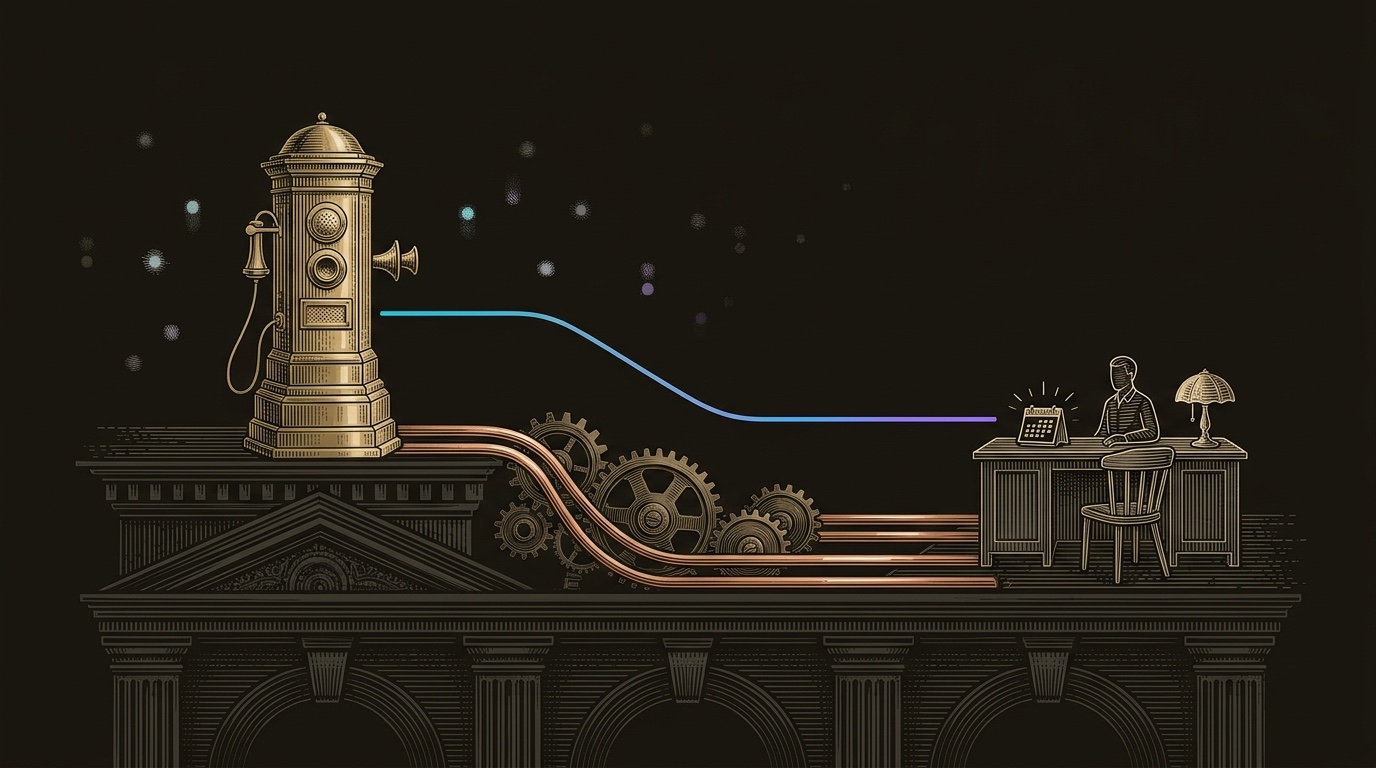
A chatbot is not pipeline until the handoff is wired. graph8 holds the routing layer. CIENCE staffs the execution, so the captured conversation becomes a meeting instead of a transcript.
Frequently Asked Questions
Do chatbots actually generate leads or just answer questions?
Yes, chatbots actively generate leads by capturing visitor contact information, qualifying prospects based on predefined criteria, and routing high-intent buyers to sales reps. According to industry data, 74% of business owners say chatbots have helped their companies achieve their goals. The key is configuring your chatbot with lead-capture flows rather than simple FAQ responses.
What is the difference between a task-oriented chatbot and a data-driven chatbot?
Task-oriented chatbots handle single functions like answering FAQs or booking appointments using preprogrammed rules. Data-driven chatbots use natural language processing and machine learning to understand context, learn from user behavior, and personalize responses over time. Most B2B lead generation chatbots fall somewhere in between, combining scripted flows with AI-powered conversation handling.
How much does a B2B lead generation chatbot cost?
Costs range widely from free basic tools to enterprise solutions costing $500 to $5,000+ per month depending on features, integrations, and conversation volume. Many platforms like Drift, Intercom, and CIENCE GO Chat offer tiered pricing. The ROI typically justifies the investment since chatbots operate 24/7 and can handle thousands of simultaneous conversations that would otherwise require additional SDR headcount.