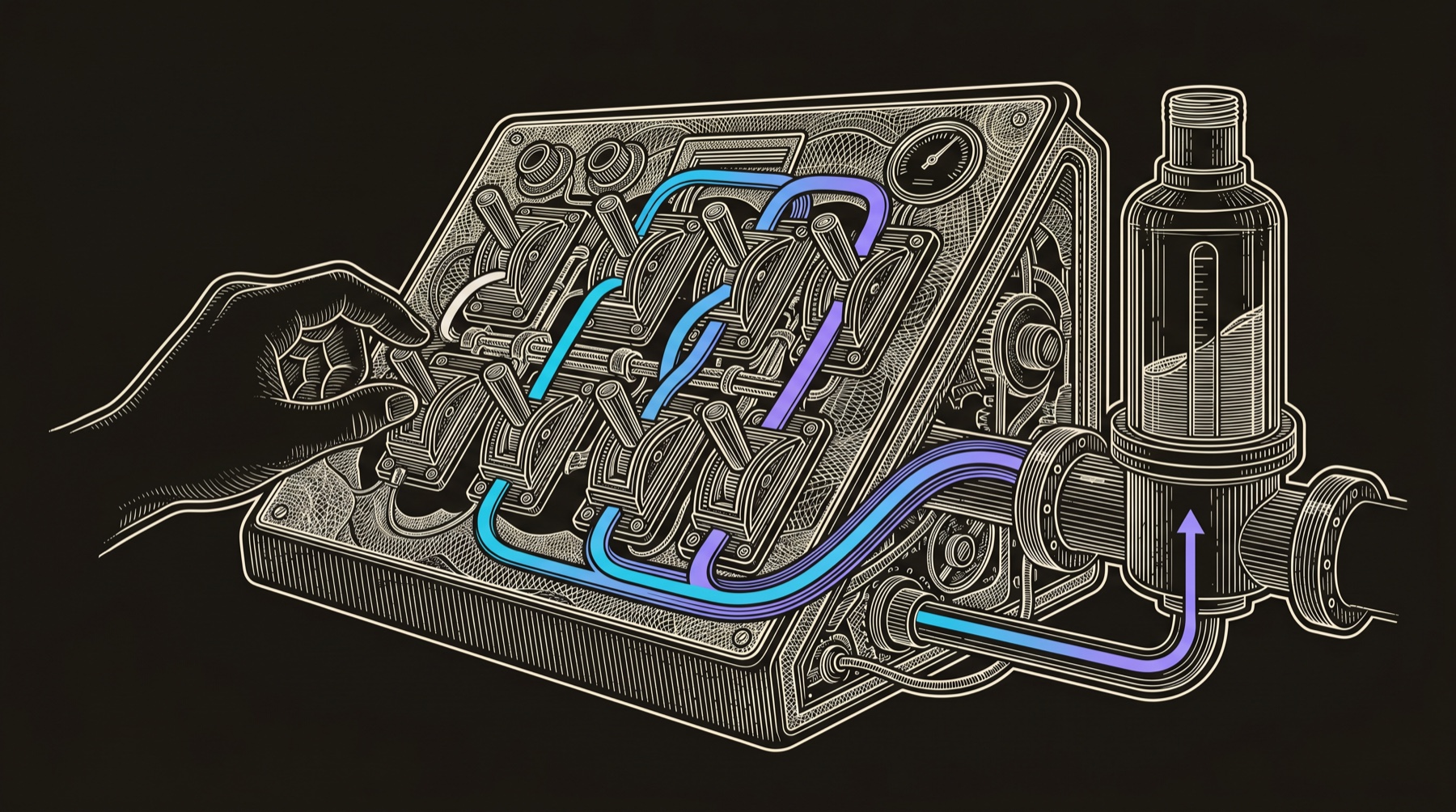

Last Refreshed: March 2026: restructured into 8 discrete hacks, updated statistics, fixed internal links.
B2B lead generation hacks are data-driven tactics: including intent-based targeting, AI-powered qualification, ABM, and multichannel sequencing: that accelerate pipeline growth by improving lead quality and conversion rates without proportionally increasing headcount or budget. In B2B marketing, lead generation is the cornerstone of revenue growth, and the gap between teams doing it well and teams doing it poorly is widening. According to industry data, 85% of B2B marketers cite lead generation as their most important goal: yet 68% still struggle to generate high-quality leads.
From Daniel Conn, GTM Strategist, graph8: "Most teams run lead gen like a numbers game: more sends, more calls, more volume. The companies that win build quality-first systems: sharper, verified lists sequenced across the channels where buyers actually spend time. High volume is usually a symptom of poor targeting, not a strategy."
The 8 hacks below are ordered by impact. Each one stands on its own: implement one this week or stack all eight over a quarter. The data supports both approaches.
Hack 1: Intent Data Targeting
What it is: Using third-party intent signals to identify companies actively researching your category right now: before they fill out a form.
Why it works: Buyers spend 70% of their decision process before contacting a vendor. Intent data lets you intercept them during that window. Using intent data to personalize outreach has been shown to deliver a 60% increase in lead conversion rates and a 40% decrease in customer acquisition costs.
How to apply it:
- Map your category keywords and stack them in an intent platform
- Flag accounts showing 3+ intent spikes in 30 days as "in-market"
- Route in-market accounts to a dedicated sequence: don't treat them like cold prospects
- Pair intent with job-change signals for a compounding targeting effect
See our full guide to best intent data providers for platform options.
Hack 2: Predictive Analytics for Lead Scoring
What it is: Using machine learning models to rank leads by likelihood to convert: so your team works the right accounts first.
Why it works: Predictive analytics applied to B2B prospecting has shown to increase conversion rates by 20% by focusing rep time on accounts with the highest probability to close. When combined with data-driven sales strategy, the productivity gains compound.
How to apply it:
- Build a scoring model using historical closed-won data (CRM + enrichment)
- Score on firmographic fit and behavioral signals (website visits, content downloads)
- Set a threshold score for SDR outreach vs. marketing nurture
- Retrain the model every quarter as your win patterns evolve
Hack 3: AI-Powered Lead Qualification
What it is: Deploying AI chatbots or conversational tools to qualify inbound leads 24/7: without waiting for a rep.
Why it works: The integration of AI-powered chatbots has revolutionized prospecting by engaging potential leads in real-time, leading to a 50% boost in lead qualification rates. Response time is one of the strongest predictors of conversion: companies that respond within 5 minutes are 100x more likely to connect with a lead vs. 30 minutes.
How to apply it:
- Deploy a chatbot on your highest-converting landing pages and pricing page
- Program qualification logic based on your ICP (company size, role, use case)
- Route qualified leads directly to calendar booking: skip the email back-and-forth
- Review chatbot transcripts weekly to identify objections you're not handling in copy
Explore how chatbots for B2B lead generation integrate with existing CRM workflows.
Hack 4: Account-Based Marketing (ABM)
What it is: Concentrating your pipeline-building resources on a defined list of target accounts with personalized, multi-channel campaigns.
Why it works: Account-based marketing tactics have resulted in a 73% increase in deal size and a 56% boost in customer lifetime value, according to RollWorks data. The precision of ABM means fewer resources are wasted on poor-fit accounts.
How to apply it:
- Build your target account list from firmographic + technographic + intent criteria
- Create personalized landing pages or direct mail packages for Tier 1 accounts
- Align sales and marketing on a shared account list: not separate ones
- Measure pipeline coverage per account, not just aggregate lead volume
See account-based marketing tools and common ABM mistakes to avoid for implementation guidance.
Hack 5: Hyper-Personalized Email Sequences
What it is: Replacing generic drip emails with sequences tailored to the prospect's industry, role, pain point, and buying stage.
Why it works: Implementing hyper-personalized email sequences tailored to specific pain points and industry challenges produces a 40% increase in lead engagement and a 20% rise in conversion rates vs. generic outreach. Email automation tools have shown a 119% increase in click-through rates when segmentation is applied correctly.
How to apply it:
- Segment your list by industry and ICP role before building sequences
- Reference the prospect's specific tech stack, recent news, or growth signals in the opener
- Limit sequences to 6 to 8 touches over 3 weeks: beyond that, quality drops sharply
- A/B test subject lines against open rate, not just reply rate
Review best cold email subject lines and timing guides to maximize deliverability.
Hack 6: Multi-Channel Prospecting
What it is: Orchestrating outreach across email, phone, LinkedIn, and direct mail rather than relying on any single channel.
Why it works: Implementing multi-channel prospecting tactics has resulted in a 35% expansion in the sales pipeline and a 25% rise in lead quality. Buyers who see your brand across multiple channels before a cold email are 3x more likely to reply.
How to apply it:
- Map your channel mix to where your ICP actually spends time (LinkedIn for SaaS, phone for SMB, etc.)
- Sequence touches so each channel reinforces the previous: don't spray the same message everywhere
- Add direct mail for Tier 1 accounts as a pattern interrupt
- Track reply rates by channel so you can rebalance the mix quarterly
Most outbound programs plateau not because of lack of effort: but because the targeting architecture is wrong from the start.
"CIENCE created scalable, predictable pipeline for us: we generated over 4,000 qualified leads in just four months.": August Ash
Hack 7: CRM Automation and Fast Response
What it is: Using CRM workflows to eliminate manual steps, route leads instantly, and trigger follow-up based on behavior: not a rep's schedule.
Why it works: CRM systems that automate lead management and sales processes reduce response time by 80% and increase conversion rates by 32%. Speed is a competitive advantage: the average company takes 42 hours to follow up on a web lead; those that respond in under an hour close 7x more.
How to apply it:
- Build routing rules that assign leads based on territory, ICP fit, and rep capacity
- Automate a same-day follow-up sequence the moment a form is submitted or a chatbot chat ends
- Use CRM data to trigger re-engagement campaigns when contacts go dark for 30+ days
- Set SLA alerts for any qualified lead that hasn't been contacted within 4 hours
See lead management software options that integrate natively with major CRM platforms.
Hack 8: Personalized Video Outreach
What it is: Recording short, custom video messages for high-value prospects: either at scale with AI tools or manually for Tier 1 accounts.
Why it works: Implementing personalized video outreach has proven to increase response rates by 300%, creating a pattern interrupt in a sea of text-based cold outreach. Video lead generation is especially effective for enterprise prospects who receive dozens of emails per day.
How to apply it:
- Record 60-second Loom or Vidyard videos referencing the prospect's company by name
- Use a custom thumbnail showing the prospect's name written on a whiteboard (increases open rates)
- Embed videos in email sequences at Touch 3 or 4: after you've established some context
- For Tier 1 accounts, record completely custom videos that reference their product, website, or recent news
How These 8 Hacks Work Together
The most powerful B2B lead gen programs stack these tactics rather than using them in isolation:
| Tactic | Primary Benefit | Impact |
|---|---|---|
| Intent Data Targeting | Reach buyers in-market | +60% conversion rate |
| Predictive Lead Scoring | Focus rep time on high-fit accounts | +20% conversion lift |
| AI Chatbot Qualification | Qualify inbound 24/7 | +50% qualification rate |
| ABM | Increase deal size with target accounts | +73% deal size |
| Personalized Email Sequences | Drive engagement with relevant messaging | +40% lead engagement |
| Multi-Channel Prospecting | Expand pipeline coverage | +35% pipeline expansion |
| CRM Automation | Eliminate response lag | -80% response time |
| Video Outreach | Break through inbox noise | +300% reply rate |
CIENCE has served 2,500+ B2B clients across 250+ industries, maintains a 4.6/5 rating on Capterra, and has deployed all 8 of these tactics at scale. The combination of intent data + ABM + multi-channel prospecting consistently produces the highest ROI per dollar spent.
"We achieved a fantastic 10% conversion rate with 150 qualified companies in our pipeline: the results far exceeded what we were generating on our own.": Turn Technologies
CIENCE + graph8 pricing: $5,000 one-time GTM system setup, $2,499/mo strategic execution, and the graph8 platform at $499/mo. No long-term contracts. See full pricing to
Whether or not you work with us, you'll walk away with a clear picture of where your pipeline is leaking and what it would take to fix it.
Frequently Asked Questions
What is the most effective B2B lead generation hack?
Intent data-based targeting is consistently the highest-impact hack, delivering up to a 60% increase in lead conversion rates and a 40% decrease in customer acquisition costs. By identifying companies actively researching topics related to your solution, you reach prospects at the moment they are most likely to engage: rather than relying on cold outreach to static lists that may be 6+ months stale.
How does ABM differ from traditional lead generation?
Account-based marketing (ABM) targets specific high-value accounts with personalized campaigns, while traditional lead generation casts a wider net. ABM tactics have been shown to increase deal size by 73% and boost customer lifetime value by 56%. The trade-off is that ABM requires more upfront research and personalization, but the ROI per account is significantly higher: particularly for enterprise deals above $50K ACV.
What role does AI play in B2B lead generation?
AI enhances lead generation across multiple touchpoints: chatbots qualify leads in real-time (50% improvement in qualification rates), predictive analytics identify high-potential leads (20% conversion lift), and AI-driven personalization at scale improves email engagement by 40%. The key is integrating AI into your existing workflow: specifically your CRM and sequencing tools: rather than treating it as a standalone point solution. See our guide to AI for lead generation for tool recommendations.
How many channels should I use for B2B prospecting?
Research consistently shows that 3 to 5 coordinated channels outperform any single channel by 35%+. The winning combination for most B2B companies is email + LinkedIn + phone, with direct mail added for Tier 1 enterprise accounts. The key word is "coordinated": each channel should reinforce a single narrative, not send disconnected messages. See our outbound lead generation strategies guide for channel sequencing frameworks.
How quickly should I follow up on a new lead?
Within 5 minutes if possible, and no longer than 4 hours. Research shows companies that respond to leads within 5 minutes are 100x more likely to connect vs. 30-minute response times. CRM automation (Hack 7 above) eliminates the human delay: build routing rules that trigger an immediate sequence the moment a lead converts, regardless of business hours.
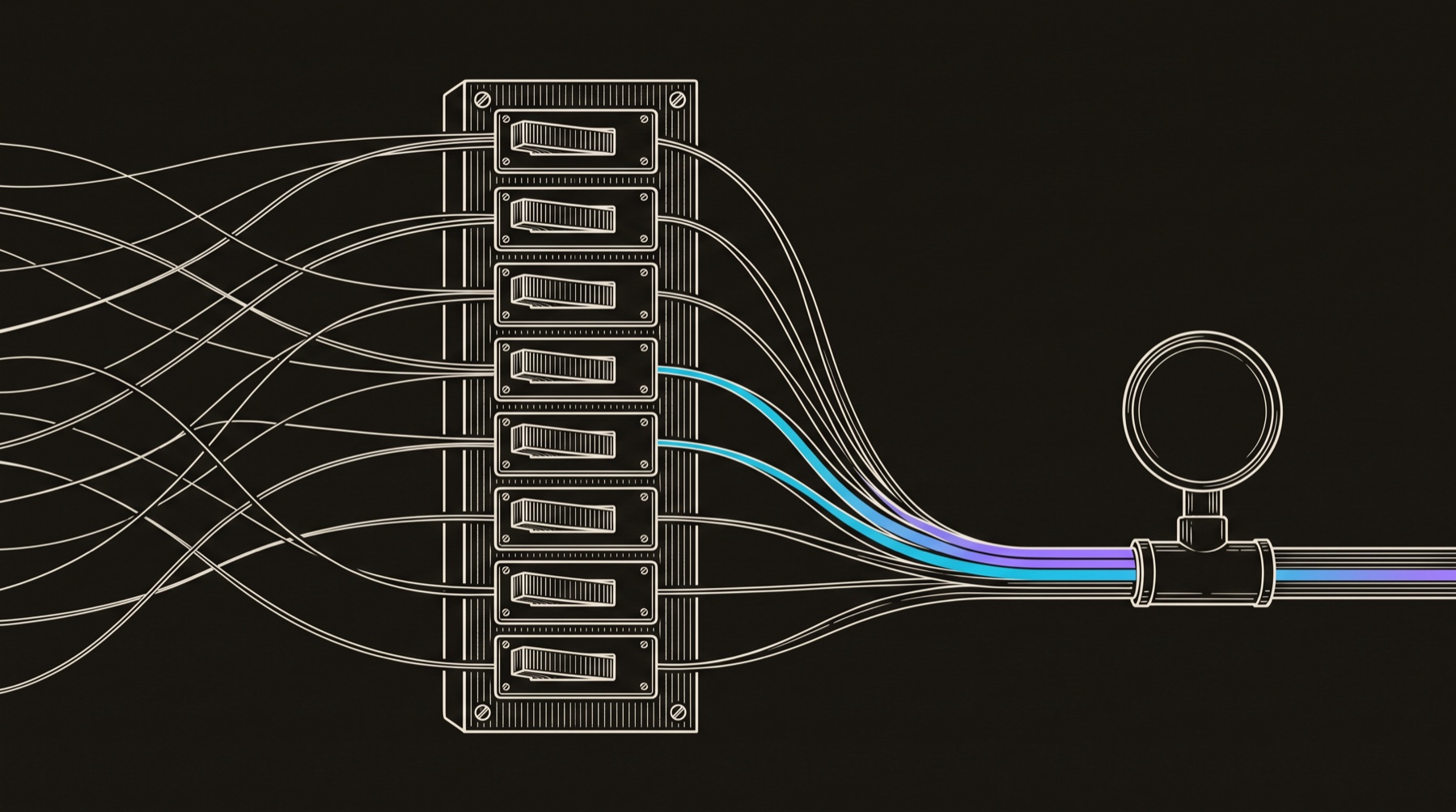
Eight switches only matter when the output is one controlled motion. Intent, scoring, qualification, ABM, personalization, channels, automation, and video all feed the same pipeline when the routing system is built first.